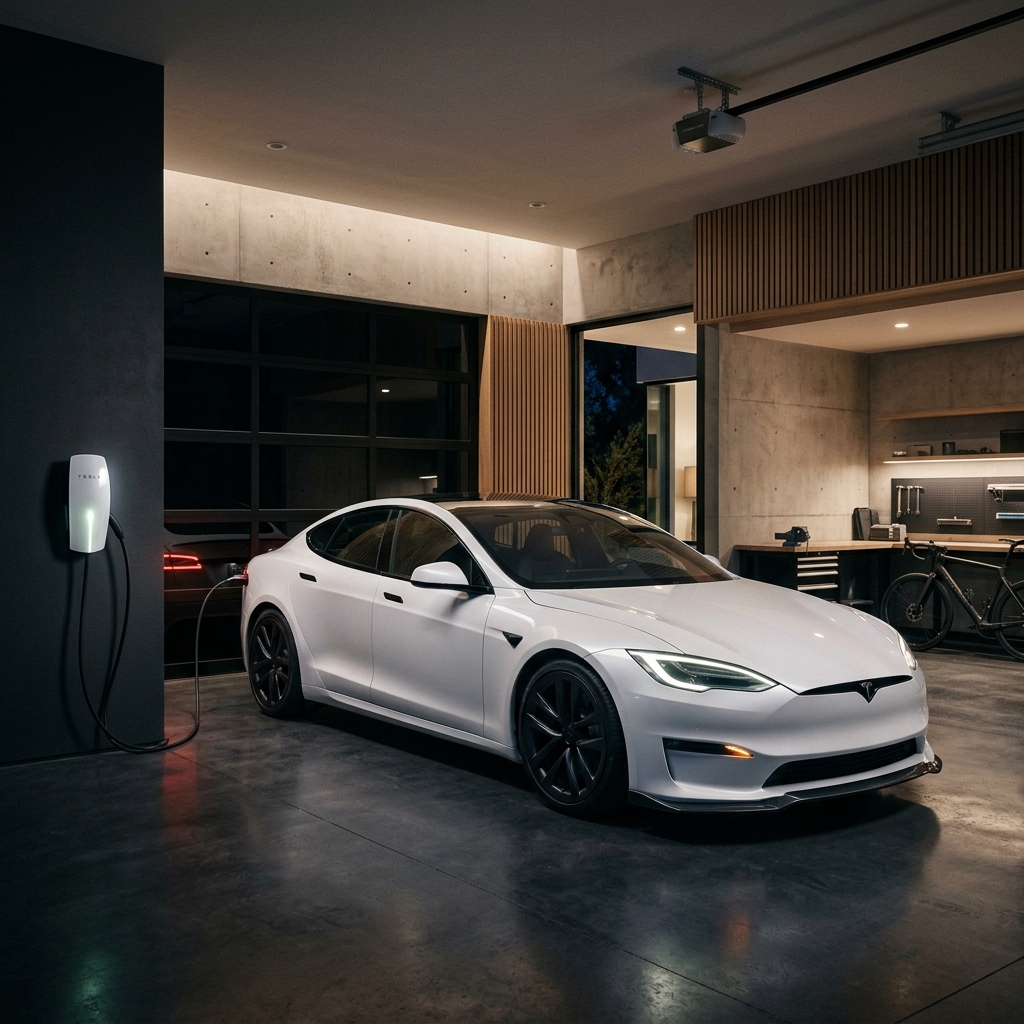
Home vs Public Charging Cost
Compare charging mix scenarios and see where EV savings can collapse.
Charging playbook
Most EV savings are created or destroyed by charging mix. The same car can look cheap or expensive depending on where your kilowatt-hours come from.
- Home AC charging is usually the anchor of low running cost.
- Public DC should be treated as a convenience premium, not as the default operating model.
- Your real EV economics depend on the ratio between home, destination, workplace, and fast charging.
Why charging mix matters more than nominal efficiency
Owners often compare cars by miles per kWh or WLTP consumption, but the cost driver that moves more violently is charging channel. A very efficient EV can still become expensive if too much energy comes from public fast chargers.
That is why every charging cost model should start with behavior: where you charge on weekdays, what happens during busy weeks, and how often you pay for urgency.
The real cost ladder across charging channels
Home AC is usually the cheapest because you control tariff timing. Workplace or destination charging can be excellent if priced well, but it depends on reliability and access. Public AC is acceptable for occasional top-ups. Public DC is the most expensive and should be reserved for road trips, time pressure, or lack of alternatives.
Once you split your charging into those buckets, cost comparisons become much more honest. Without that split, many buyers underestimate the drag of public charging dependency.
- Best case: mostly home charging, small share of public AC, rare DC.
- Balanced case: home charging plus weekly public top-ups.
- Fragile case: no home charging and frequent reliance on fast charging.
How to decide if your setup is robust
A robust setup survives routine changes. If one late return, one broken charger, or one winter week pushes you into expensive DC sessions, your operating model is weak even if the spreadsheet looks fine in average conditions.
Stress-test your setup by asking what happens when home charging is unavailable for a week. If the monthly bill changes sharply, you need more margin in the decision.
Cost mistakes buyers repeat
The classic error is assuming public charging is only a tiny percentage and then discovering that travel, apartment living, or irregular schedules make it routine. Another is using the cheapest tariff on paper without checking whether your household can actually shift charging to the cheapest hours.
Good EV economics come from repeatable behavior, not from theoretical peak savings.
Operational checklist before you commit
- Estimate charging share across home AC, destination, public AC, and DC.
- Price each channel separately instead of using one blended number.
- Test a week without home charging to see how fragile the plan becomes.
- Check off-peak availability against your real arrival time.
- Use road-trip charging as an exception, not as the monthly baseline.
Frequently asked questions
Is public charging always too expensive?
Not always. It becomes a problem when it is your default instead of your backup or travel solution.
Can apartment owners still save with an EV?
Yes, but the answer depends on nearby tariffs, charger reliability, and how much of your charging can happen off peak.
What is the best first step?
Build your cost model around charging mix before comparing vehicle specs or financing offers.
Final takeaways
The EV itself is only half of the equation. The charging system around your life is the other half, and it often decides whether the savings are durable or fragile.
If you understand your charging mix honestly, you can decide with much more confidence and fewer surprises.
Tools to validate your charging setup
Use these calculators to pressure-test tariffs, charging mix, and installation cost before you commit.