Least Expensive Electric Cars in the US (2026 Prices & Leases)
A data-driven guide to the cheapest EVs available in the US for 2026. We compare purchase prices, lease deals, and tax credit eligibility to find the absolute lowest cost of entry.

Author: Carlos Vega
Reviewed: Marina Costa
The 2026 EV market has flipped the script—leasing is currently the most aggressive path to a cheap electric car, often undercutting purchase prices by leveraging the full $7,500 federal tax loophole. If you’re looking strictly at MSRP, you might miss the best deal. This guide breaks down the real numbers on the least expensive electric cars you can park in your driveway today, including state-level rebates, utility incentives, and the hidden cost of insurance that can make or break your budget.
- The Chevrolet Equinox EV LT and Nissan Leaf are tied for the lowest true purchase price, falling well under $30,000 after the federal tax credit—but only one charges at modern speeds.
- Leasing a Hyundai IONIQ 6 or Kona Electric can yield effective monthly payments below $200 due to manufacturers passing on the commercial EV credit, which bypasses the Inflation Reduction Act's assembly restrictions.
- Don't ignore destination charges and 'dealer add-ons'; the window sticker is your legal shield against inflated markups on entry-level EVs, and some states cap doc fees while others don't.
- For budget buyers, the 2026 incentive landscape favors North American and South Korean automakers over European luxury brands, creating a two-tier market where geography dictates your best financial move.
Electric vehicles are no longer a luxury experiment for early adopters. With massive inventory build-ups, battery manufacturing costs plunging to historic lows, and intense competition, the entry-level EV market in 2026 has become a battlefield. Automakers are cutting prices and deploying aggressive lease subsidies to move metal.
However, finding the true lowest cost of entry requires looking past the flashy MSRP advertisements. In 2026, a high MSRP model can sometimes cost less per month than a cheaper model due to the mechanics of the federal tax credit and leasing structures.
If you want to evaluate purchase and lease structures side-by-side with your own tax profile, use our free Lease vs Buy Car Calculator. In this guide, we will analyze the real math behind the least expensive electric cars in the United States today.
1. The Direct Purchase Duel: Chevy Equinox EV vs. Nissan Leaf
When looking at the absolute lowest purchase price for a new electric car, two models stand out. However, they represent two completely different technological eras.
| Feature / Model | Nissan Leaf (S Trim) | Chevrolet Equinox EV (LT Trim) |
|---|---|---|
| Base MSRP | $28,140 | $34,995 |
| Federal Tax Credit | No (Does not qualify) | Yes ($7,500 point-of-sale) |
| Net Purchase Price | $28,140 | $27,495 |
| EPA Range | 149 miles | 319 miles |
| Fast Charging Port | CHAdeMO (Obsolete) | CCS / NACS (Modern standard) |
| Battery Cooling | Passive Air-Cooled | Active Liquid-Cooled |
The Chevy Equinox EV: The New Value King
General Motors has built a stellar value proposition with the Equinox EV LT. With a base MSRP of $34,995, it qualifies for the full $7,500 point-of-sale federal tax credit, dropping the purchase price to $27,495 before tax, title, and dealer fees.
For under $28,000, you get a spacious crossover with an EPA-estimated 319 miles of range and up to 150 kW DC fast charging. Its active liquid cooling system protects the battery from degradation, ensuring robust long-term resale value. You can compare its specifications directly against other affordable crossovers using our EV Comparison Tool.
The Nissan Leaf: The Legacy Budget Commuter
The Nissan Leaf remains the cheapest MSRP electric car on paper at $28,140. However, because it is assembled with cells that do not meet the strict Inflation Reduction Act (IRA) battery sourcing requirements, it does not qualify for the purchase federal tax credit. This makes the Leaf more expensive to purchase than the far superior Equinox EV.
Furthermore, the Leaf relies on the obsolete CHAdeMO plug, meaning finding highway fast chargers is increasingly difficult in 2026. Coupled with its passive air-cooled battery—which degrades rapidly in hot climates—the Leaf only makes financial sense if purchased with massive dealer-level discounts (typically $5,000+ off MSRP) and used exclusively as a home-charged city runabout.
2. The Section 45W “Lease Loophole”: A Cheat Code for Cheap Cars
If you are buying a car, the IRS enforces strict rules on vehicle assembly location and battery material sourcing. If a vehicle or battery is made in South Korea, Japan, or Germany, you get $0 in purchase tax credits.
However, if you lease the vehicle, the rules change completely.
Under IRS Section 45W, leased vehicles are classified as “commercial vehicles.” Commercial clean vehicle credits do not have assembly or battery sourcing restrictions. The commercial credit of $7,500 goes directly to the leasing bank (e.g., Hyundai Motor Finance). Almost all manufacturers pass this full $7,500 discount directly to the lessee as a capitalized cost reduction.
This “lease loophole” creates a two-tier market where foreign-manufactured EVs are incredibly cheap to lease, even if they are expensive to buy outright.
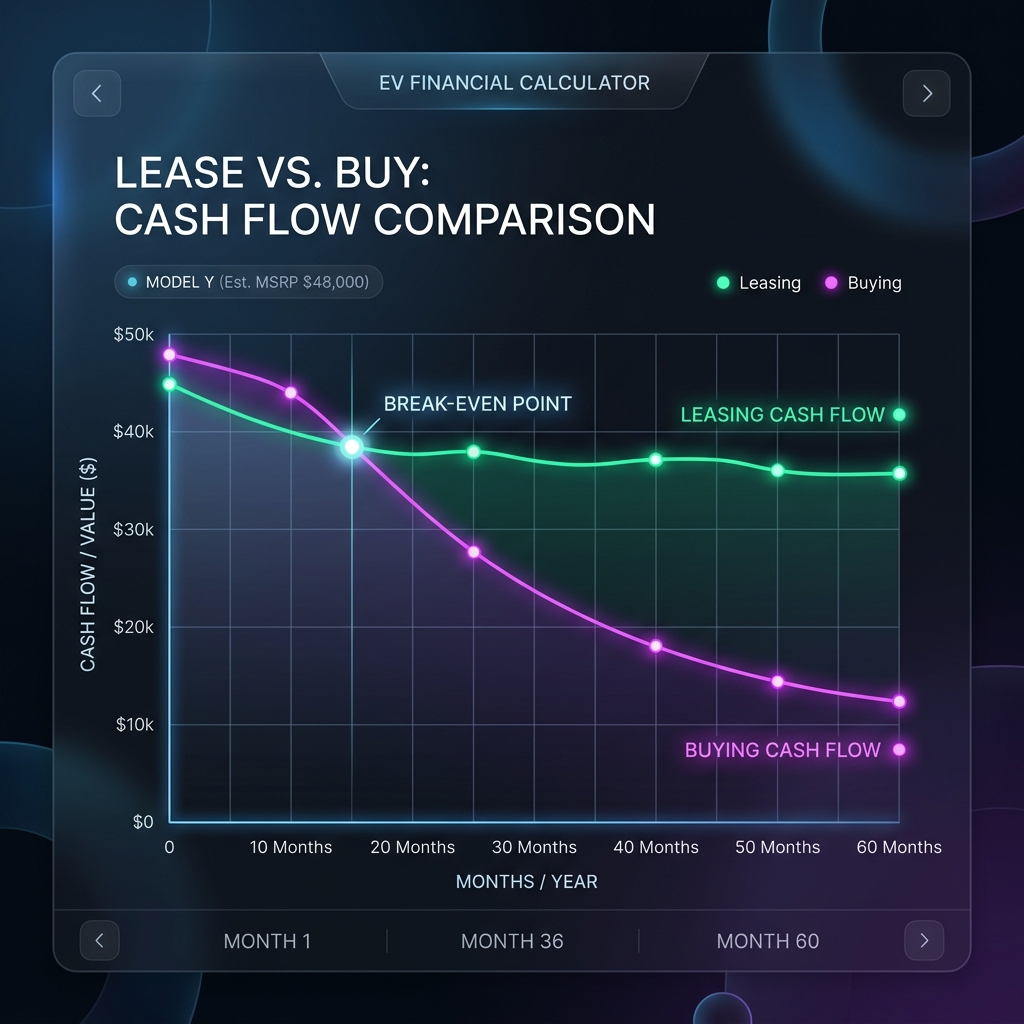
The $199/Month Club: Hyundai Kona and Ioniq 6
Thanks to Section 45W, Hyundai and Kia have been able to offer extremely aggressive leases on models like the Hyundai Kona Electric and the ultra-efficient Hyundai IONIQ 6.
- Hyundai Kona Electric (SE): Frequently advertised at $189 to $219 per month with minimal down payments.
- Hyundai IONIQ 6 (Standard Range): Often leased for under $230/month. The IONIQ 6 is an aerodynamic marvel, yielding over 4.0 miles per kWh, meaning your charging bill will be minimal.
Leasing also shields you from the high depreciation rates that plague modern EVs. To see if this path is right for you, read our full analysis on EV Leasing vs Buying.
3. State Rebates: Layering Your Discounts
Depending on where you live, state-level clean vehicle incentives can stack with federal credits to make electric cars ridiculously cheap.
- Colorado: The state offers a $5,000 tax credit for electric vehicles with an MSRP under $80,000, which stacks with the $7,500 federal credit. On a Chevrolet Equinox EV, this drops the net price to $22,495.
- California: Programs like the Clean Cars 4 All program provide grants up to $12,000 for lower-income households scrapping older vehicles.
- Massachusetts: The MOR-EV program offers a $3,500 rebate at the point of sale.
Before signing a contract, check your state and municipal utility website. Many electric utilities offer rebates of $500 to $1,500 for installing a Level 2 home charger.
4. The Hidden Cost Trap: Insurance Premiums
While saving money at the pump is a major motivator, budget-focused buyers must account for the EV insurance premium penalty.
On average, insuring an electric vehicle costs 20% to 30% more than a comparable gas car. Why?
- High Repair Costs: Even minor fender-benders can require replacing high-tech sensors or structural battery components.
- Specialized Labor: Certified EV technicians charge higher hourly rates.
- Total Loss Threshold: If the structural shell of a battery pack is scratched in an accident, insurance companies will often write the entire vehicle off as a total loss rather than risking battery fires.
A monthly fuel saving of $100 can be completely wiped out if your insurance premium increases by $95. Always request a quote using the prospective vehicle’s VIN before finalizing your purchase. For a deeper breakdown of these cost drivers, see our EV Insurance Cost Guide.
5. The “Walk-Away Protocol” for the Finance Office
When buying or leasing a budget EV, the dealership finance office is where your great deal can be dismantled. Dealerships make their highest margins on back-end products. Use the following rules to protect your discount:
- Reject the “Four-Square” Worksheet: Dealers use a four-box grid (focusing on trade-in value, purchase price, down payment, and monthly payment) to hide high interest rates (Money Factors on leases) and extra fees. Insist on seeing the itemized lease worksheet or a line-item bill of sale.
- Watch the Documentation Fee: The “Doc Fee” covers administrative costs. Some states (like California) cap this fee at $85. Others (like Florida) have no cap, allowing dealers to charge $799 or more. Treat this as a negotiable item; if they won’t lower the fee, demand a corresponding reduction in the car’s sales price.
- Say No to Ancillary Products: Budget EVs do not need mechanical breakdown insurance, interior fabric protection, or key replacement packages. These add-ons are rolled into your monthly payment, quietly raising your total cost by thousands.
Operational checklist before you commit
- Verify the specific VIN qualifies for the $7,500 point-of-sale rebate on the IRS FuelEconomy.gov portal before signing—not all trims of the same model qualify.
- If leasing, ask for a 'zero down, zero drive-off' structure to avoid capitalizing drive-off fees into a hidden high interest rate.
- Obtain auto insurance quotes with the exact vehicle VIN in advance—higher EV premiums can dilute fuel savings by $50-$100 monthly.
- Confirm whether the dealership claims the tax credit on your behalf as a point-of-sale discount rather than forcing you to wait for tax filing season.
Frequently asked questions
Is the Nissan Leaf still a good buy in 2026?
While the purchase price is exceptionally low, its air-cooled battery and obsolete CHAdeMO charging port limit its utility to short city commuting. For road trips or resale value security, modern liquid-cooled platforms like the Equinox EV are superior.
How does the leasing loophole work?
Under IRS Section 45W, leased electric cars are classified as commercial vehicles. This bypasses stringent North American assembly and battery sourcing rules, allowing foreign-built models from Hyundai, Kia, and Fiat to immediately receive the $7,500 tax credit passed directly as a lease reduction.
Final takeaways
For direct purchasing, the Chevrolet Equinox EV LT represents the best value for range, charging speed, and features. However, if monthly cash flow is your priority, leasing a South Korean EV is the most cost-efficient path to electric driving in 2026.