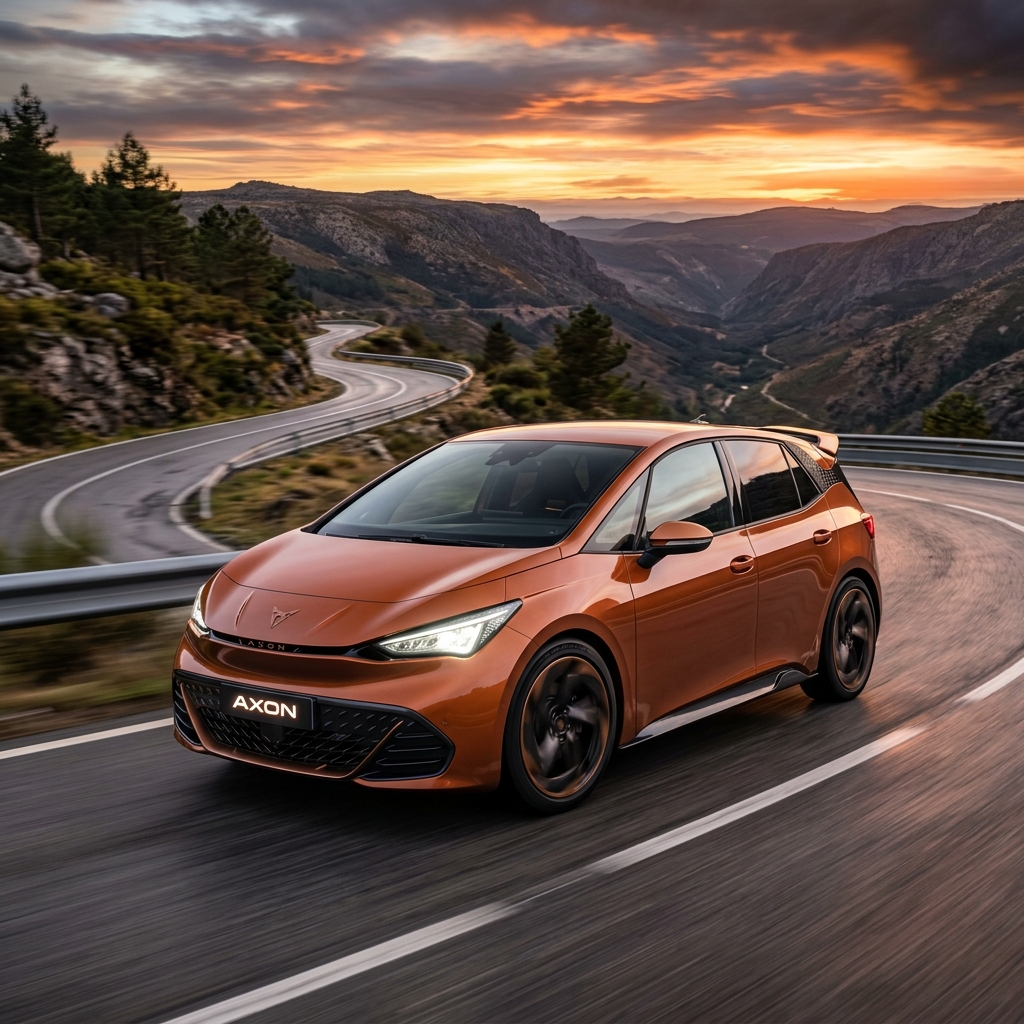
Used Cupra Born Guide: Is a €25,000 Deal a Bargain or a Risk? Expert Analysis
We analyze a real offer for a 2025 Cupra Born with 2,000 km. A comprehensive 1,500-word analysis on why this price is a historic opportunity but requires technical caution.
Written & Reviewed by
Ownership economics
The Cupra Born at €25,000 represents the first real symptom of deflation in the used electric car market.
- 40% depreciation in less than a year: Historic buying opportunity.
- 77 kWh Battery: Real-world urban range of up to 550 km.
- Official Warranty Active: Technical security against battery failure.
- Software Risk: Need to validate version 3.5 or higher.
The Cupra Born at €25,000 represents the first real symptom of deflation in the used electric car market. What was once an unattainable dream is now positioned at the price of a conventional mid-range thermal compact.
Introduction: The Cupra Born phenomenon at a breakthrough price
The electric vehicle market in 2025 has entered an aggressive maturity phase. An official dealership is putting on the table an offer that, just twelve months ago, would have seemed like a typo: a Cupra Born e-Boost Pack + Battery Pack 170 kW (231 hp), equipped with the coveted 77 kWh net battery and the Advanced Plus trim, registered in 2025 and with barely 2,000 kilometers, for only €25,000.
To put this in perspective, the price of this new vehicle, adding the mentioned equipment packages, well exceeded €42,000 before taxes and incentives. We are talking about a depreciation of 40% in less than a year for a car that smells like new. But why is this happening? Is this used Cupra Born a “unicorn” or the symptom of a larger problem in the electric car value chain?
In this deep analysis, we are going to break down every bolt, every battery cell, and every line of code of this offer so that you decide with data, not impulses.
Market Analysis: Why this price now?
To understand if a car is a bargain, first you have to understand the ecosystem. In 2025, several factors have converged for the used Cupra Born to fall below the psychological barrier of €30,000:
- Tesla’s “Price War”: Tesla’s aggressive moves on the Model 3 have forced other European manufacturers, especially the VW Group, to adjust their margins. A Cupra Born cannot compete at €40,000 if a Model 3 offers more technology for a similar price.
- Excess Inventory of Management Units: Many of these 2,000 km units are early leasing “buy-backs” or returns that brands use to meet emission quotas (CAFE), then dumping them onto the second-hand market as nearly-new.
- Incentive Uncertainty: With various government programs reaching critical phases, many dealers prefer to quickly offload certified pre-owned stock before incentive regulations change.
Technical Specs and Performance: Sporty DNA in Electric Format
The Cupra Born is not just a Volkswagen ID.3 with a different logo. Martorell’s engineering has had a hand in the chassis so that the car behaves like a true Cupra, with a firmer and more communicative setup.
| Specification | Technical Detail |
|---|---|
| Peak Power | 170 kW / 231 hp (with e-Boost function) |
| Torque | 310 Nm instantaneous |
| Top Speed | 160 km/h (electronically limited) |
| Battery | 77 kWh net (82 kWh gross) |
| Battery Technology | Lithium-Ion NCM 712 |
| Architecture | 400 Volts |
| Curb Weight | 1,950 kg (approximate) |
The e-Boost Effect: Marketing or reality?
The e-Boost function is what separates this unit from the standard 204 hp versions. It allows a peak of additional power for 30 seconds, ideal for overtaking on secondary roads or quick entries. This power is delivered entirely to the rear axle, which gives the Born a dynamic character far superior to its front-wheel drive rivals. In tight corners, the Born feels agile, with a front end that obeys precisely thanks to the standard progressive steering.
The 77 kWh Battery: Real Range and Degradation
This is the strongest point of the analyzed unit. While the 58 kWh battery falls short for frequent intercity trips, the 77 kWh one turns the Born into a mile-eater capable of crossing countries with a single strategic stop.
- Urban Use: In the city, thanks to regenerative braking (Mode B) and the efficiency of the permanent magnet motor, it’s easy to see consumption of 13-14 kWh/100 km. This translates into a real range that can exceed 550 km.
- Highway Use (120 km/h / 75 mph): This is where physics rules. At steady legal speed and with the climate control in comfort mode, consumption rises to 20-22 kWh/100 km. The real travel range stabilizes at around 350-380 km.
- Thermal Impact: The Born 77kWh uses a very advanced liquid thermal management system. With 2,000 km, degradation should be non-existent. A key fact: this battery pack is known for its robustness against repeated fast charging, provided it’s not abused habitually.
Charging: Demystifying 125 kW
One of the “buts” usually put to the Born is its maximum charging power of 125 kW in direct current. However, in the current charging network, what matters is the charging curve.
The Born maintains powers above 100 kW until almost 40-45% charge, and does not fall below 50 kW until exceeding 80%. In a typical travel stop to go from 10% to 80%, you will take about 32-35 minutes. It’s just the right time for a coffee and a necessary break. If you’re looking for 15-minute recharges, you’ll have to jump to Kia or Hyundai’s 800V, but paying €15,000 more.
Advanced Plus Equipment: Necessary Luxury
The Advanced Plus trim is the “sweet spot” of the Cupra catalog. It includes:
- Matrix Full LED Headlights: Essential for driving safely at night. Their ability to “carve out” the beam around other vehicles is simply magic and increases safety exponentially.
- SEAQUAL Bucket Seats: These are probably the best seats in their category. Comfortable for 500 km and with a lateral grip that keeps you in place when you decide to enjoy the rear-wheel drive.
- 360º Top View Camera: In tight urban parking lots, having a bird’s eye view of the car prevents scratching those precious 19-inch wheels.
The Risks: What they won’t tell you at the dealership
For €25,000, we must be aware that we are not buying a perfect car. These are the friction points:
1. Software 4.0
Although 2025 units mount the 12.9” screen with the latest software, there are still sporadic bugs in the connection with wireless Apple CarPlay or Android Auto. Ensure the unit has all available Over-The-Air (OTA) updates installed.
2. Touch Ergonomics
The capacitive controls on the steering wheel are an ergonomic nightmare for some drivers. It’s easy to press “OK” accidentally while turning the wheel. Also, the temperature sliders under the screen remain unlit in some variants, making them difficult to use at night.
3. EV-Specific Tires
The Born usually mounts low rolling resistance tires (like the Continental EcoContact 6). They are expensive to replace and wear out faster than in a thermal car due to the weight of the batteries. With 2,000 km they should be new, but watch out for flat spots from sudden braking.
Comparison: Born vs Tesla vs ID.3
| Model | Used Price (Approx) | Battery | Why choose it? |
|---|---|---|---|
| Cupra Born 77kWh | €25,000 | 77 kWh | Balance, Design, and Official Warranty |
| Tesla Model 3 RWD | €28,000 | 60 kWh | Better software and proprietary network |
| VW ID.3 Pro S | €24,000 | 77 kWh | More understated, unbeatable turning radius |
The Born wins in perceived quality. While the Tesla feels more like a “gadget,” the Cupra feels like a well-built European car, with better acoustic insulation and a suspension that absorbs road bumps better.
Expert Verdict
If the battery is healthy and the history is transparent, it is an indisputable bargain. The risk is minimal thanks to the current factory warranty, making it one of the smartest ways to access long-range electric mobility today.
Operational checklist before you commit
- Battery State of Health (SOH) Report: Demand the official certificate (must be 100%).
- Suspension Mounts: Ask if the front suspension has been checked for noises.
- Software Version: Verify it's 3.5 or higher in the infotainment system.
- Extended Warranty: Try to negotiate 2 additional years in the price.
- Charging Cable: Ensure it includes the Mode 3 (Mennekes) cable.
Frequently asked questions
Is this car suitable for families with children?
Yes. The rear seat space is surprisingly generous thanks to the MEB platform. Two ISOFIX child seats fit without legroom issues.
How much is the insurance for a Cupra Born?
Estimate between €600 and €900 for comprehensive coverage with a medium deductible, due to the high cost of sensors.
Can I travel across the country with 125 kW charging?
Absolutely. The main corridor networks now allow traveling with the 77 kWh battery without planning every stop to the millimeter.
Final takeaways
The 2025 Cupra Born e-Boost 77 kWh for €25,000 is the best rational electric vehicle purchase today.
Verdict: If the battery report is clean, buy it before the market absorbs this stock.
Tools to validate the buying decision
Use these calculators to compare cash flow, depreciation, and payback before locking in a financing or buying path.